

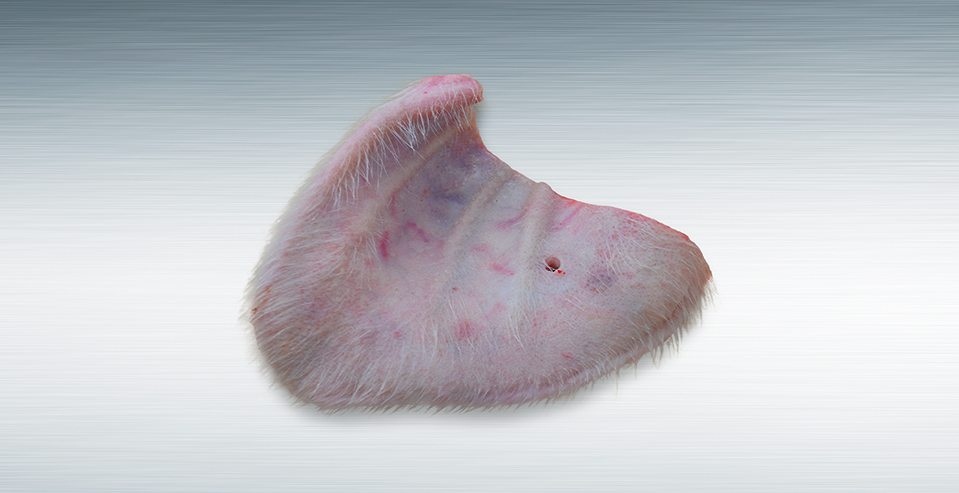
Porcine Ears (Pig Ears)
SSR supplies porcine ears, also known as pig ears or pork ears, for pet treat manufacturing, pet food production, specialty applications, and further-manufacturing programs.
Materials are sourced through SSR’s established porcine supply programs and can be prepared, packaged, and delivered according to customer specifications. Porcine ear materials may be supplied for established production needs or custom programs requiring defined preparation, handling, packaging, storage, documentation, or traceability.
Common Applications for Porcine Ears
- Pet treat and dog chew manufacturing
- Dried and smoked pig ear products for companion animals
- Pet food and companion-animal product development
- Further-manufacturing inputs where porcine ear material is an appropriate starting material
- Specialty animal-product applications requiring defined preparation or handling
- Custom porcine material programs requiring project-specific preparation, packaging, documentation, or traceability
Product Details
What processing and quality standards are applied to porcine (pig) ears?
- Pork ears are square-cut with the eardrum removed.
- Hair and hide remain intact.
- Product is denatured using liquid charcoal for identification and compliance.
What are porcine (pig) ears used for?
- Our pig ears are commonly supplied to pet food companies for use as dog treats.
- When dried and smoked, pig ears become a durable chew that satisfies a dog’s natural instinct to gnaw, making them a popular and enjoyable option for pet owners.
What are the appearance and quality characteristics of porcine (pig) ears?
- Product is rinsed and must give every indication of being fresh and free from any off conditions, off-odors, gassiness, wetness or slimy conditions.
- All product must be free of extraneous and foreign material and give every indication of being fresh and be free of any off-conditions.
- All products are harvested from animals who have passed USDA antemortem and postmortem inspection.
- All Products come from plants with robust HACCP, FSQ, and traceability programs.
How should porcine (pig) ears be stored and handled?
We offer a range of storage and packaging solutions to meet diverse needs. The most common option is frozen packaging in a wax-lined box. Additional options include:
- Cardboard combos
- Individually packed bags
- Coolers or containers
- And many more customized solutions
Standard storage temperatures include 0°F (-17.8°C) for frozen products and 40°F (4.4°C) for refrigerated products, ensuring product integrity and freshness.
Storage, Handling & Shipping
Porcine ear materials are handled to support freshness, quality, and product integrity. Standard storage temperatures include 0°F (-17.8°C) for frozen products and 40°F (4.4°C) for refrigerated products. Packaging options may include wax-lined boxes, cardboard combos, individually packed bags, coolers, containers, and other custom solutions. SSR can support shipping approaches such as overnight carrier delivery, freezer truck or LTL, and wet or dry ice depending on project needs.
Explore other SSR porcine materials:
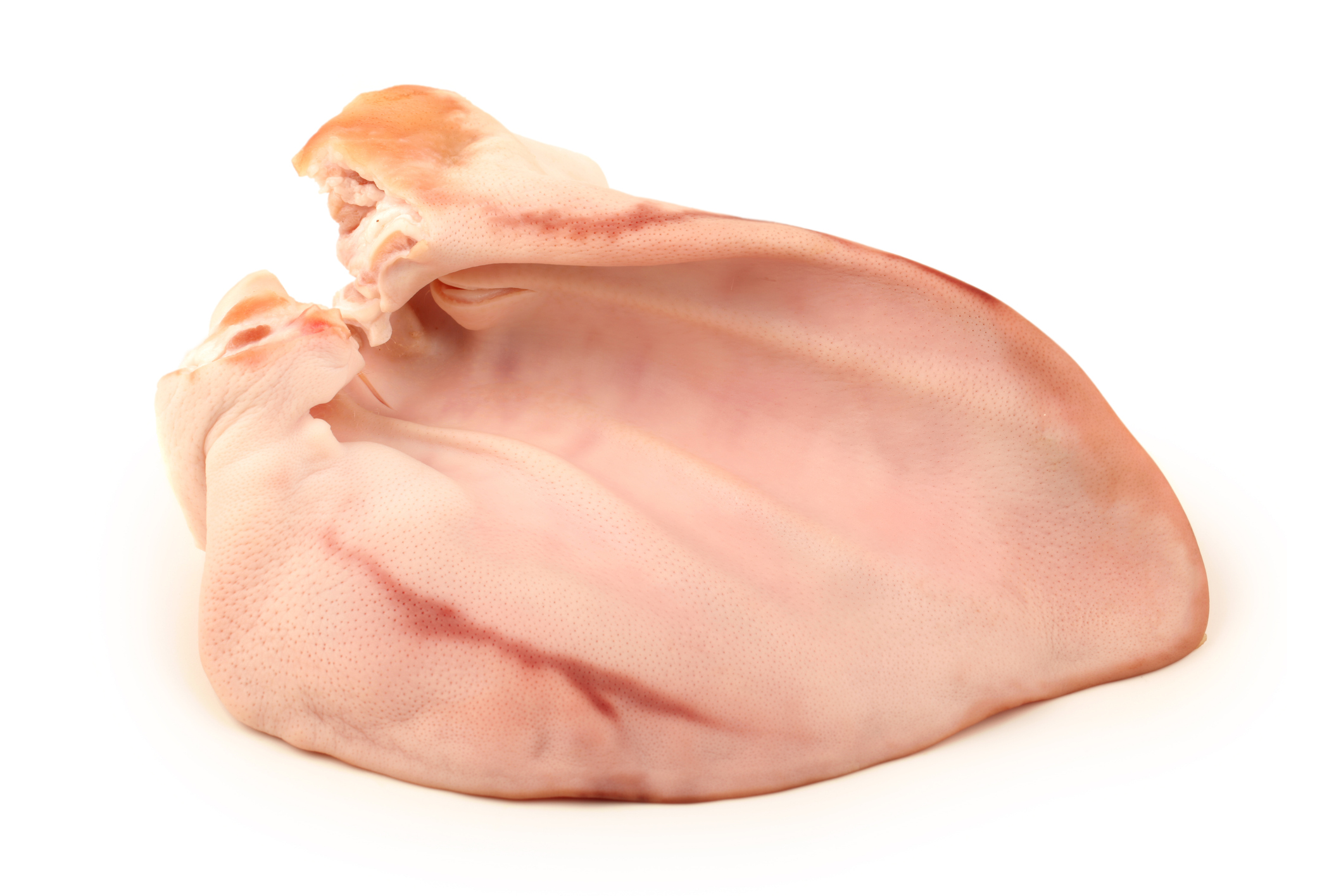
Porcine Ear FAQs
What are porcine ears?
Porcine ears are ear tissue sourced from pigs and may also be referred to as pig ears or pork ears. SSR supplies porcine ears for pet treat manufacturing, pet food production, specialty applications, and other appropriate further-manufacturing programs.
What are pig ears commonly used for?
Pig ears are commonly supplied to pet food companies for use as dog treats and chews. When dried and smoked, pork ears can be processed into durable chew products for companion animals.
Does SSR supply pork ears in bulk?
SSR can support both project-specific requirements and larger-volume porcine ear supply programs. Available quantities, preparation, packaging, documentation, and logistics can be tailored according to customer and program requirements.
How are porcine ears prepared and packaged?
SSR’s current product specifications state that pork ears are square-cut with the eardrum removed, while the hair and hide remain intact. The product is denatured using liquid charcoal for identification and compliance. Packaging options may include wax-lined boxes, cardboard combos, individually packed bags, coolers, containers, and other customized solutions.
Can SSR provide quality controls and traceability for porcine ears?
Yes. SSR states that porcine ears are sourced from animals that have passed USDA ante-mortem and post-mortem inspection. Products come from facilities with HACCP, food safety and quality, and traceability programs to support customer and program requirements.
Process Control



Sustainable Swine Resources
A proud member of the Johnsonville family
SSR Overview
For over 30 years, SSR Lifesciences has provided biomedical researchers, companies and manufacturers a complete range of high-quality porcine materials sourced, prepared and delivered precisely to client's specifications.