
When your research depends on porcine tissue, “close enough” isn’t good enough. Variables like animal source, tissue handling, trimming, preservation, and shipping conditions can all influence downstream performance, especially in sensitive workflows where reproducibility matters.
At Sustainable Swine Resources (SSR), we help researchers and manufacturers get porcine materials prepared and delivered precisely to spec. SSR has the flexibility to match demanding protocols and timelines.
Below is a practical, study-friendly guide for ordering the right custom porcine material, along with a checklist you can use to define your specifications clearly.
Priorities When Selecting Porcine Tissue
Our partnership approach begins by thoroughly understanding your application, specifications, and standard operating procedure (SOP). Following this, we build a protocol for processing, preservation, and shipping that aligns with your goals.
Before selecting a tissue type, we recommend confirming:
- Intended use: pilot study, method development, validation, manufacturing input, etc.
- Key performance needs: e.g., structural integrity, vessel patency, minimized contamination risk, consistency across lots
- Time sensitivity: how fast you need collection-to-ship and delivery
With that context, we can recommend the right sourcing and preparation pathway, rather than forcing your study into a generic product format.
Choose the Right Porcine Material Category
We provide a wide range of high-quality porcine materials, including tissues, blood, bone, cartilage, fluids, glands, membranes, organs, nerves, and ligaments.
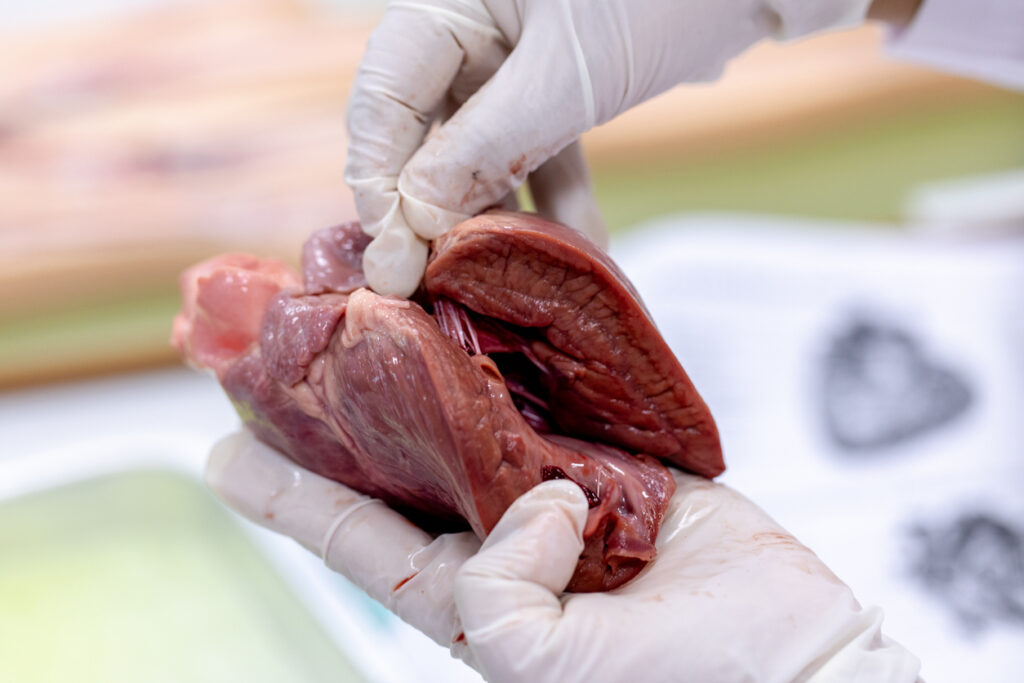
Common examples we support include:
Organs & glands
Adrenal, brain, esophagus, eyes, gall bladder, heart, intestines, kidneys, liver, lungs, pancreas, spleen, stomach, thyroid, thymus, urinary bladder.
Blood vessels
Aorta, carotid arteries, hepatic arteries & veins, jugular veins, renal arteries & veins, vena cava.
Reproductive organs
Amnion, ovaries, umbilical cord, uterus.
Fluids
Bile, blood, ingesta, urine.
Other porcine tissues
Fat, femur, humerus, jaw/skull, full legs, mesentery, scapula, tendons & ligaments, tracheas, vertebra.
Translate your SOP Into Actionable Tissue Specs
We focus on materials that are sourced, sized, and trimmed to your specifications, so your order request should mirror the language of your SOP.
Here are the most useful specification areas to define:
1) Sourcing requirements
Academic and product development research often require different source-animal considerations. In our experience, no single type of source animal is ideal for all applications.
2) Harvesting and preparation
We work with you to create aligned protocols for harvesting, processing, preservation, and shipping.
3) Processing steps that impact cleanliness and usability
Depending on your SOP, we can incorporate processing options researchers may require. They may include bioburden reduction, material debridement, dissection, arterial/vein preservation related to organs. For more information on what we support, click here.
Acquiring Porcine Materials is a Collaboration
We’re built around customized porcine materials that fit exact specifications. Supported by the scale and resources of our parent company, we create dependable solutions.
If you bring a clear SOP, we can help translate your study needs into a repeatable sourcing and preparation protocol, so the tissue you receive behaves the way your research expects.
Start the conversation: ssr-solutions.com · Contact SSR