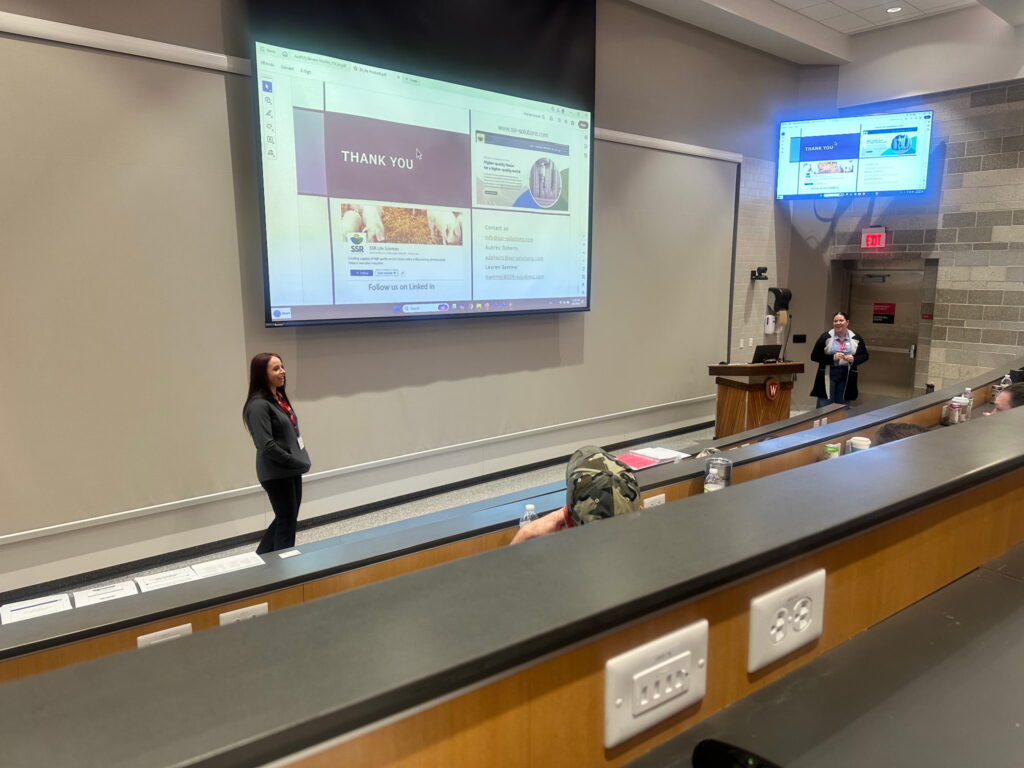
On January 22, the Sustainable Swine Resources (SSR) team had the opportunity to represent Johnsonville at the University of Wisconsin–Madison’s Animal Harvest and Product Utilization School, part of the university’s Master Meat Crafter Program.
Highlighting the Value of Porcine Biologics
SSR team members Aubrey Doherty and Lauren Sammel delivered a presentation titled “Are By-Products Really By-Products? A Look at Porcine Biologics.” Their session focused on the value of non-meat animal tissues and the critical role they play across multiple industries, including medical devices, pharmaceuticals, biologics, and pet food.
The presentation walked attendees through how these materials are used, highlighting important process and regulatory considerations involved in producing products such as heparin and wound-healing devices. Doherty and Sammel also led a discussion on regenerative medicine, emphasizing how animal tissues, like those supplied through SSR, support ongoing research in human disease and tissue development.
A key takeaway from the session was a shift in perspective: viewing all animal materials as products rather than by-products. This approach not only reflects their real-world value but also reinforces the importance of responsible sourcing and utilization throughout the supply chain.
Industry Engagement and Education
The workshop brought together 23 participants from meat companies across the country and serves as a professional development opportunity for individuals looking to deepen their expertise in meat processing. SSR appreciated the chance to engage with industry professionals and looks forward to participating in future UW–Madison sessions.